Monday, September 5, 2016

South Carolina - "The Palmetto State"


South Carolina is bordered to the north by North Carolina, to the South and West by Georgia across the Savannah River, and to the east by Atlantic Ocean. The capital and largest city is Columbia. The name Carolina dates back to 1629 in honor of the British king of Carolina or Carolus which in Latin means "Charles". Carolina was settled to make profit from trade and also by selling land. In the early years not many people bought land there and Carolina was not developed the way it was planned. It split between northern and southern Carolina, creating two different colonies.
The official nickname for South Carolina is Palmetto State, referring to the state tree, the sabal palmetto palm trees or commonly referred to as cabbage palmetto. The sabal palmetto tree symbol was also added to the national flag of Southern Carolina.
South Carolina has a humid subtropical climate which makes it very hot and humid in summer time. The state is officially affected by tropical cyclones. This is an annual concern during hurricane season. The state average around 50 days of thunderstorm activity a year.
South Carolina's coast is home to one of the country's richest culinary traditions knows as Lowcountry Cuisine. The lowcountry includes the coastal regions of South Carolina and Georgia. While this cuisine  shares features with Southern cooking, it considers the geography, economics, demographic and cultures of the regions of these states. The cuisine consist of rich diversity of seafood from coast and uses the vibrant Caribbean cuisine and African cuisine influence, and has strong parallels with New Orleans and Cajun cuisine.
Food that are traditionally part of lowcountry cuisine can consist of Turtle soap, Oyster soap, Gumbo, catfish stew, Frogmore stew and many others. Shrimp and grits is another traditional dish in Lowcountry of Southern Carolina. This dish is said to have begun as a fisherman's breakfast, created by shrimpers using the days catch. Original recipes called for sautéing the small local shrimp in butter and serving the seafood as a topping for creamy, stone-ground grits.  Grit is a food made from corn that has been treated with alkali which is ground into a meal and then boiled. Today, there is a variation of Shrimp and Grits as creative cooks embellish the classic dish with everything from bacon and mushrooms to fresh truffles.
While the fans of soupy grits many not find the Shrimp and Grits served in Pig and Pickles Restaurant in Scottsdale, AZ to their liking, this may be the most flavorful version in town, laden with cheese and a thick, spicy tomato gravy.  Pig and Pickles in a gastropub that serves up small batch, barrel aged cocktails and all kinds of comfort food. It is a sweet place to hand out.


Creamy Broccoli and Brown Ale Soup

Shrimp and Grits


Bone Marrow


Saturday, August 13, 2016

South Dakota - "Mount Rushmore State"

South Dakota is a state located in the Midwestern region of the United States, bordered by the states of North Dakota, Minnesota, Iowa, Nebraska, Wyoming, and Montana. It is named after the Lakota and Dakota Sioux Native American tribes, who comprise a significant portion of the population and historically dominated the entire territory. The state capital is Pierre.
 
South Dakota is an expansive, sparsely populated state where rolling prairies give way to the dramatic Black Hills National Forest. Black Hills is home to two historical monuments carved right into towering granite peaks: Mt. Rushmore, the iconic depiction of 4 revered U.S. presidents, and Crazy Horse Memorial, a long-in-progress tribute to the storied Native American tribal leader.
 
The state has a strong agricultural base. It is the largest industry in the state. South Dakota routinely ranks among the top 10 states for the production of hay, sunflowers, rye, honey, soybeans, corn, wheat and cattle. Tourism is also a significant contributor, bringing in about $2 billion, annually. The service sector, retail trade and manufacturing industries account for the majority of the state's employment.
 
South Dakota heritage is a combination of indigenous people and settlers who made their way to the region over the last few centuries. In South Dakota, you will find German, Scandinavian and Native American cuisine served side by side, resulting in a distinct regional cuisine specific to the state.  Chislic, Kuchen, Kolaches, Wasna and Wojapi are among some of the native and unique cuisine of the state of South Dakota. Bison Burgers, mistakenly knows as Buffalo Burgers are naturally very popular in this state. Interesting enough, there is a small town named Bison in Perkins County, South Dakota, with population of less than 500 people. The town is named after the American bison which were once numerous in the area.
 
Chislic, Kutchen or other authentic dish served in the state of South Dakota is no where to be found in Arizona restaurants, however there are plenty of places around the valley that serve frybread.  But wait! Was frybread inspired or originated in South Dakota? The answer is No. According to Navajo tradition, frybread was created in 1864 using the flour, sugar, salt and lard that was given to them by the United States government when the Navajo, who were living in Arizona, were forced to make the 300 mile journey known as the "Long Walk" and relocate to Bosque Redondo, New Mexico onto land that could not easily support their traditional staples of vegetables and beans.For many Native Americans, frybread links generation with generation and also connects the present to the painful narrative of Native American history. It is often served both at home and at gatherings. The way it is served varies from region to region and different tribes have different recipes. It can be found in its many ways at state fairs and pow-wows, but what is served to the paying public may be different from what is served in private homes and in the context of tribal family relations. Frybread can be eaten alone or with various toppings such as honey, jam, or hot beef. Frybread can also be made into tacos, like Indian tacos. It is a simple complement to meals. One may question that what does South Dakota have to do with frybread?

Frybread was made the official state bread of South Dakota when Governor Mark Rounds signed House Bill No. 1205 on February 25, 2005. The South Dakota Legislature approved a bill designating by frybread, an American Indian staple, as the official state bread. The house voted 64-3 to add frybread to the long list of state symbols that includes coyotes, honey bees and walleyes, making South Dakota the first in nation to choose frybread a state symbol. Supporters have said it is time for the state to officially recognize a symbol of Indian culture. "Does it represent our heritage? Does it represent our culture? Does it represent our history?"  Asked State Representative, Larry Rhoden. He then said YES to all three.

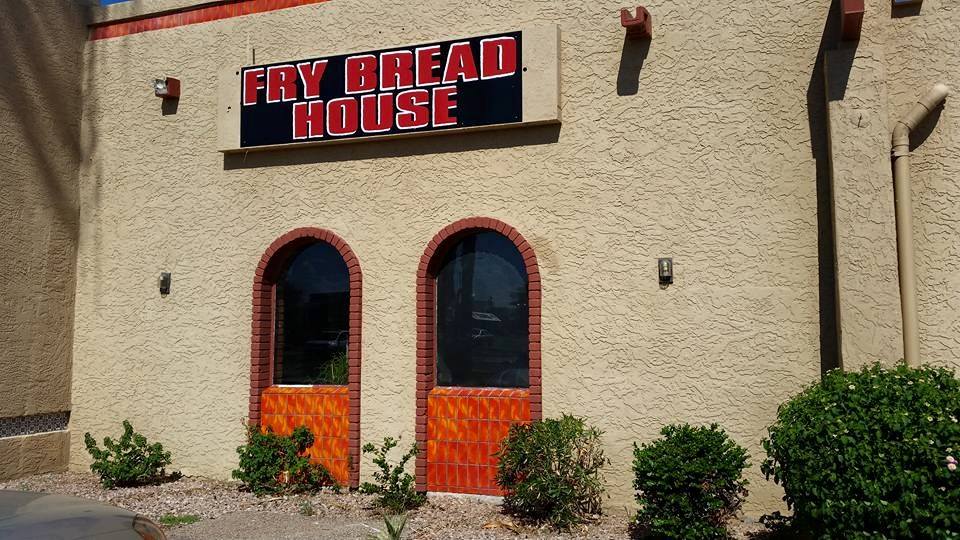
There is a restaurant in Phoenix, AZ named Fry Bread House, a simple spot serving savory and sweet creations made from American Indian Frybread. Though the food in this restaurant is delicious and truly tasty, the cleanliness and the house keeping needs a lot of improvement.

\


Frybread served like a Taco

Frybread with different toppings


Frybread can be served alone or compliment to meals

Sweet Frybread


Monday, August 1, 2016

Georgia - "Peach State"

 
Georgia is a southeastern U.S. state whose diverse terrain spans coastal marshland and beaches to wide stretches of farmland. Atlanta, its sprawling capital, is the birthplace of civil rights leader Martin Luther King, Jr. Georgia is bordered on the south by Florida, on the east by Atlantic Ocean and South Carolina, on the west by Alabama, and on the north by Tennessee and North Carolina.
The majority of the state is primarily a humid subtropical climate. Hot and humid summers are typical, except at the highest elevations. Agriculture has played a dominant role in the English colonist, led by General James E. Oglethorpe, in Savanna. One of the major goals of the colonist was to produce agriculture commodities for export to England. To achieve this objective, Oglethorpe sought the advice and counsel of Tomochichi, leader of the Yamacraw tribe. The Indians were skilled in hunting and fishing, and especially in the cultivation of corn, beans, pumpkins, melons, and fruits of several kinds. The colonist learned agricultural practices from the Native Americans, and this collaboration was profitable from the very beginning. They produced enough corn the first year to export some 1,000 bushels to England. They also began establishing enterprises that would produce silk and wine, which were especially in demand in England. In 1735 Queen Caroline of England wore a dress made of imported Georgia silk to celebrate her fifty second birthday. By 1742 Georgia silk had became an important export commodity, and by 1767 almost a ton of silk was exported to England each year.
Widespread farms produce peanuts, corn, and soybeans across middle and south Georgia, The state is the number one producer of pecans in the world, the region around Albany in Southwest Georgia being the center of Georgia's pecan production. Georgia is also in the top five blueberry producers in the United States and a leading producers of Peach.
Georgia peach industry has a long tradition. The first peaches were planted in the state in the eighteenth century, and the first commercial production occurred in the mid-nineteenth century. In 2014 Georgia ranked third nationally in peach production, behind California and South Carolina. That year, Georgia produced 35,500 tons of peaches. In 1851, Georgia was being the first to ship and sell the peaches successfully outside of the South. The method of shipping peaches were in champagne baskets, rather than in pulverized charcoal, helped to preserve the flavor of the fruit and contributed to more success and profit. Peach export expanded considerably in the late nineteenth and early twentieth centuries, resulting in an all time high production of almost 8 million bushels by 1928. Since then production has decreased to about 2.6 million bushels annually. Nearly all peaches grown in Georgia are sold in the wholesale fresh market, with a small percentage sold at roadside markets.
Georgia's cuisine includes a variety of different foods ranging from seafood, corn on the cob and chicken and dumplings to Brunswick stew, friend chicken and cornbread. Other well known and loved foods in the state include pecans, peaches and peanuts. The state prepared food is Grits, properly known as hominy grits, is a food made from corn that been treated with an alkali in a process called nixtamalization, which is ground into a meal and then boiled. Nixtamalization typically refers to a process for the preparation of grains, in which the grain is soaked and cooked in the alkaline solution, usually limewater, and hulled. Grits are usually served with other flavorings as a breakfast dish, usually savory. It is popular in the Southern United States, where it maybe found as an evening entrée when made with shrimp. Grits should not be confused with boiled ground corn mazie which makes "hasty pudding" or "mush". While a Shrimp Grits can be found in the menu of the Blue Hound Kitchen and Cocktails in Phoenix, AZ, the way of preparation, the taste and the authenticity of this item maybe under question for the natives or those who lived in the state of Georgia. Therefore, the alternative signature item was chosen for this journey and that would be Cobblers.
Cobblers are an American deep dish fruit dessert or pie with a thick crust (usually a biscuit crust) and a fruit filling such as peaches, apples and berries. Some versions are enclosed in the crust, while others have a drop biscuit or crumb topping. The world largest Peach Cobbler can be seen and tasted at the annual Georgia Peach Festival. This huge dish is 11 by 5 feet (about 3 by 2 meters) and eight inches (about 20 centimeters) deep. The recipe requires 75 gallons (285 liters) of local peaches, 90 pounds of real butter, 32 gallons (about 122 liters) of whole milk, 150 pounds of wheat flour, and 150 pounds of sugar. The giant cobbler is prepared in brick oven constructed specially for the cobbler. For a baking pan, the chef utilize clean school bus floor panels. This process takes 5 hours to complete and starts with dividing the ingredients into five work stations that are manned by eight people. All of the ingredients are mixed in large, clean trash cans and stirred with boat paddles. Festival attendees bring their own containers and can take home as much peach cobbler as they can handle. If one is truly craves a taste of Georgia's Peach Cobbler, Bootleggers in Scottsdale, AZ punches up their peach cobbler with smattering berries, making it one of the best cobblers in the state of Arizona.


Fruit Cobbler
 
Peach and Berry Cobbler


Moonshine


More Moonshine


Thursday, June 16, 2016

Missouri - "The Show Me State"


Missouri is landlocked and borders eight different states. Missouri is bounded by Iowa on the north; by Illinois, Kentucky, and Tennessee across the Mississippi River on the east; on the south by Arkansas; and by Oklahoma, Kansas, and Nebraska (the last across the Missouri River) on the west. The two largest rivers are the Mississippi (which defines the eastern boundary of the state) and the Missouri River (which flows from west to east through the state) essentially connecting the two largest metros of Kansas City and St. Louis. Jackson City is the capital of the state.
Although it is usually today considered part of the Midwest, Missouri was historically considered by many to be a border state, chiefly because of the settlement of migrants from the South and its status as a slave state before the Civil War, balanced by the influence of the St. Louis. The counties along Missouri River in the center of the state, were settled by Southern migrants who held the greatest concentration of slaves.
The state of Missouri annually receives an average of of 16,695,000 visitors to its national parks and other recreational areas totaling 202,000 acres, giving it $7.41 million in annual revenues, 26.6% of its operating expenditures.
While much of the state's history is tied to the mighty rivers that flow through it, the "Show Me State" got its nickname because of the devotion of its people to simple common sense. In 1899, Rep. Willard D. Vandiver said, "Frothy eloquence neither convinces nor satisfies me. I'm from Missouri. You've got to show me."
 
In Missouri, much of the cuisine is influenced by that of the Ozarks (also referred to as the Ozark Mountains, Ozarks Mountain Country). Barbecue, both pork and beef, is popular in both St. Louis and Kansas City, as well as in much of the southern half of the state.
St. Louis-style pizza is a distinct type of pizza popular in the city of St. Louis, Missouri and surrounding areas. The definitive characteristics of St. Louis-style pizza are a very thin crust made without yeast, the common (but not mandatory) use of Provel white processed cheese, and pizzas cut into squares or rectangles instead of wedge.  Prove cheese is a trademark for three cheeses fused to form one (provolone, Swiss, and white Cheddar).
 
Here is a surprising fact,  some may claim Toasted Ravioli was originated in Sicily, where fried ravioli containing a sweet filling is a traditional Christmas time dish. However, most accounts of the first toasted ravioli can be traced to the Italian neighborhood, known as "The Hill", of St. Louis, Missouri, in the United States.
 
For a taste of Missouri cuisine, one can try Frasher's Smokehouse in the heart of Phoenix, AZ.  Privately owned and operated by George Frasher. The Frasher's Smokehouse serves seven different types of smoked meats including pulled pork, ribs, and trip-tip. The St Louis pizza is not on the menu, but if the pizza dough  is available George and his staff provide the best St Louise style pizza in Arizona. While dining there, definitely try the delicious Toasted Ravioli, the St Louis's creation. The service and the whole experience in this restaurant are indeed impeccable.


St Louise Style Pizza


Barbeque

Burnt End Barbeque

Toasted Ravioli